

Introduction
Just like most things in life, creating flawless artificial intelligence (AI)-generated content takes quite a bit of trial and error. AI models are everywhere now, and using them might seem quite easy. But crafting effective prompts? That’s where the real skill comes in. In fact, AI prompt engineering is an emerging field solely dedicated to optimizing the instructions given to AI systems.
Generative AI tools like ChatGPT use advanced natural language processing to produce responses that sound human. Users enter prompts – also known as commands – to guide ChatGPT in writing everything from catchy marketing headlines to dramatic screenplay scenes. Basic instructions yield decent outputs, the more detail and context provided leads to even better results.
You can further refine robotic AI writing with an AI humanizer tool to give your text the perfect tone and cadence. AI humanizers take AI-written text and transform it into something that sounds genuinely human. It smooths out awkward phrasing, adds natural flow, and ensures the right emotional touch.
Practice makes perfect, and this guide is your starting point to becoming an AI prompt engineering master. But first, let’s explore the fundamentals of human writing and how it stacks up against AI-generated text.
What Sets Human Writing Apart
AI writing tools have nailed speed and grammar, but let's face it – human writing still has that certain “je ne sais quoi.” It's our knack for thinking creatively and emotionally that gives our writing an edge. AI platforms like ChatGPT, on the other hand, rely on patterns and data, which means they often miss out on the subtleties and personal touches that make human writing come alive.
ChatGPT and similar AI chatbots often churn out text that’s contextually spot-on but can sometimes feel a bit robotic. You might notice repetitive words, choppy sentences, or vague generalizations in your AI-generated writing – all telltale signs of AI at work. Even if you don’t catch these quirks, AI detectors sure will. These tools, armed with clever algorithms, scan your text to reveal AI-generated content. They're sharp, but not flawless.
To outsmart AI detectors and enhance your AI-generated content, you need strategic prompts and an AI humanizer like WriteHuman. Let’s take a closer look at why your AI prompts might be missing the mark and how you can improve them.
Why Your ChatGPT Outputs Fall Flat
Basic ChatGPT prompts might get the job done, but they won’t deliver the wow factor you’re looking for. Why? Because these prompts often lack the detail and specificity needed to guide the AI learning model toward producing truly engaging and accurate content.
Common mistakes include being too vague, not providing enough context, or expecting the AI to read your mind. Imagine asking ChatGPT, “Tell me about marketing.” The response will be broad and generic, glossing over what you actually need.
Another pitfall is forgetting to specify the desired tone or style, leading to outputs that might not fit your brand’s voice. Without clear, detailed prompts, you’ll often end up with content that feels flat and uninspired.
To get the best results, you need to guide the AI writing tool with detailed and specific instructions. Here are some tips to help you craft better ChatGPT prompts for undetectable, humanlike outputs.
ChatGPT Prompt Writing Tips for Humanlike Results
When writing ChatGPT prompts, throwing in a few words and hoping for the best is not the most effective strategy. AI writing tools require clear and precise commands to coax out the most humanlike responses.
Detailed instructions transform robotic text into engaging, personality-rich content. Whether you’re drafting a sales pitch, generating a scene in a novel, or outlining a research paper bibliography, the quality of your prompts directly impacts the AI’s ability to deliver relevant and compelling output.
Achieving humanlike responses from ChatGPT involves strategic prompt writing. Here are some tips to help you get the most natural and engaging results:
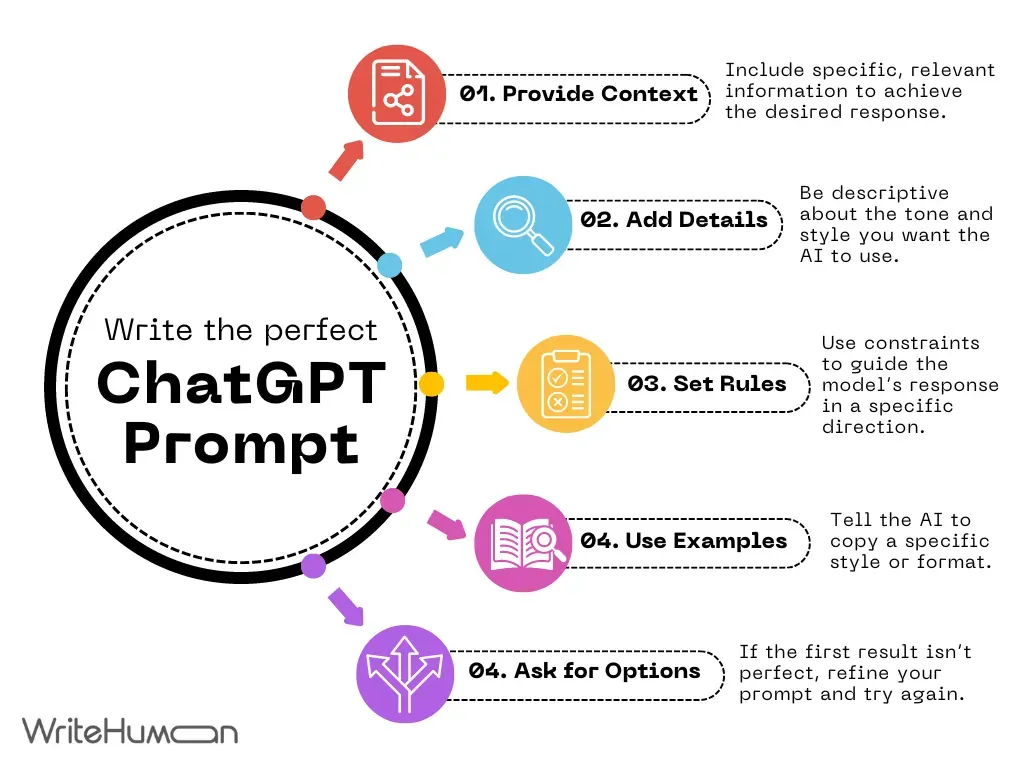
Set the Stage: Give plenty of context to guide the AI model. Go into depth about what you want to write, where it will be used, who’s reading it, and information to include. "Write an informative article for an online blog that reviews the environmental impact of the dairy industry, including relevant quotes from farmers and statistics about milk consumption."
Break it Down: Complex topics benefit from a structured approach. Organize your prompt into smaller, manageable parts to guide the AI through the thought process. For example, instead of asking for a general overview of artificial intelligence, specify steps like defining AI, discussing its applications in healthcare, and outlining future trends. For longform writing requests, you can also ask ChatGPT to provide responses one paragraph at a time, rather than generating the entire text upfront. This will give you more control over the output and allow you to tweak as you go.
Go Into Detail: Specificity is key. Be descriptive about the tone and style you want. Explain whether you need a formal, casual, humorous, or professional tone. The more detail you provide, the richer the AI’s response will be. Instead of “Describe a sunset,” try “Describe a sunset over the ocean, focusing on the colors in the sky and the reflections on the water.” Parameters like "Write in a friendly, conversational tone" or "Adopt a formal, authoritative style" help the AI align with your desired voice.
Copy That: Examples are powerful prompt additions that illustrate the style or structure you’re looking for to the AI model. Provide sample texts or templates to set explicit expectations. You might say, “Write a short poem about the nostalgia of summer in the style of Walt Whitman” and include a sample review. This gives the AI a clear template to follow.
Roleplay: Have the AI take on a specific persona for more dynamic responses. This can help inject authenticity and authority into the output. For example, use “As a fitness coach, write a motivational email to a client who is struggling to stay on track with their workout routine.”
Set Ground Rules: Establish boundaries and clear guidelines to keep the content on track. Specify word count limits, avoid jargon, or mandate the inclusion of specific keywords. Clear restrictions help the AI focus and deliver content that meets your exact requirements. Try “Write a summary of this article in under 200 words, make it in the 3rd person and keep the language tone authoritative and simple.”
Don’t Settle for Less: If the initial output isn’t quite right, refine your prompt and try again. Prompt engineering is an iterative process, and tweaking your prompts can lead to significantly better results. When generating content, ask ChatGPT to provide multiple options. You can pick and choose the best parts from each version, splicing together a custom response that meets your exact needs.
Try an AI Humanizer
Effective prompt writing isn’t just about giving ChatGPT something to work with—it sets the stage for meaningful writing that delivers a lasting impression. Clear commands steer the AI model toward natural and relevant outputs that capture the attention of your readers from start to finish. But here's the thing: while AI tools like ChatGPT are great at producing content, they sometimes lack that finesse that makes text truly engaging.
AI humanizers improve your workflow by taking AI-generated text and polish it to sound more natural, engaging, and in tune with human emotions. It smooths out any robotic edges, injects personality, and ensures your message resonates authentically with your audience. AI humanizers refine ChatGPT outputs, to ensure they accurately convey information and connect with your readers.
Discover the difference that AI humanizers make and start captivating your audience like never before. Try WriteHuman today and see how it enhances your ChatGPT outputs with human-like warmth and clarity.
FAQs
How can I improve my ChatGPT prompts for better results?
To craft effective prompts, ensure they are detailed, specific, and provide context about the topic, audience, and desired outcomes. Break down complex topics into manageable parts, specify tone and style preferences, and consider providing examples or templates to guide the AI towards desired outputs.
What are some common mistakes to avoid when writing ChatGPT prompts?
Common pitfalls include being too vague, assuming the AI understands implicit instructions, and neglecting to specify desired tones or styles. It’s also important to set clear guidelines, such as word count limits or inclusion of specific keywords, to steer AI outputs towards meeting precise requirements.
How do AI humanizers like WriteHuman enhance ChatGPT outputs?
AI humanizers like WriteHuman refine AI-generated text by adding natural flow, emotional resonance, and personality. They smooth out robotic phrasing and ensure that content reads authentically, aligning with desired tones and styles. This enhancement is essential for creating content that resonates with readers on a deeper, more human level.
Why should I try WriteHuman for refining my ChatGPT content?
WriteHuman offers a transformative approach to enhancing AI-generated text, making it more relatable, engaging, and impactful. By smoothing out robotic text and infusing human-like warmth and clarity, WriteHuman ensures that your content stands out and connects effectively with your audience.